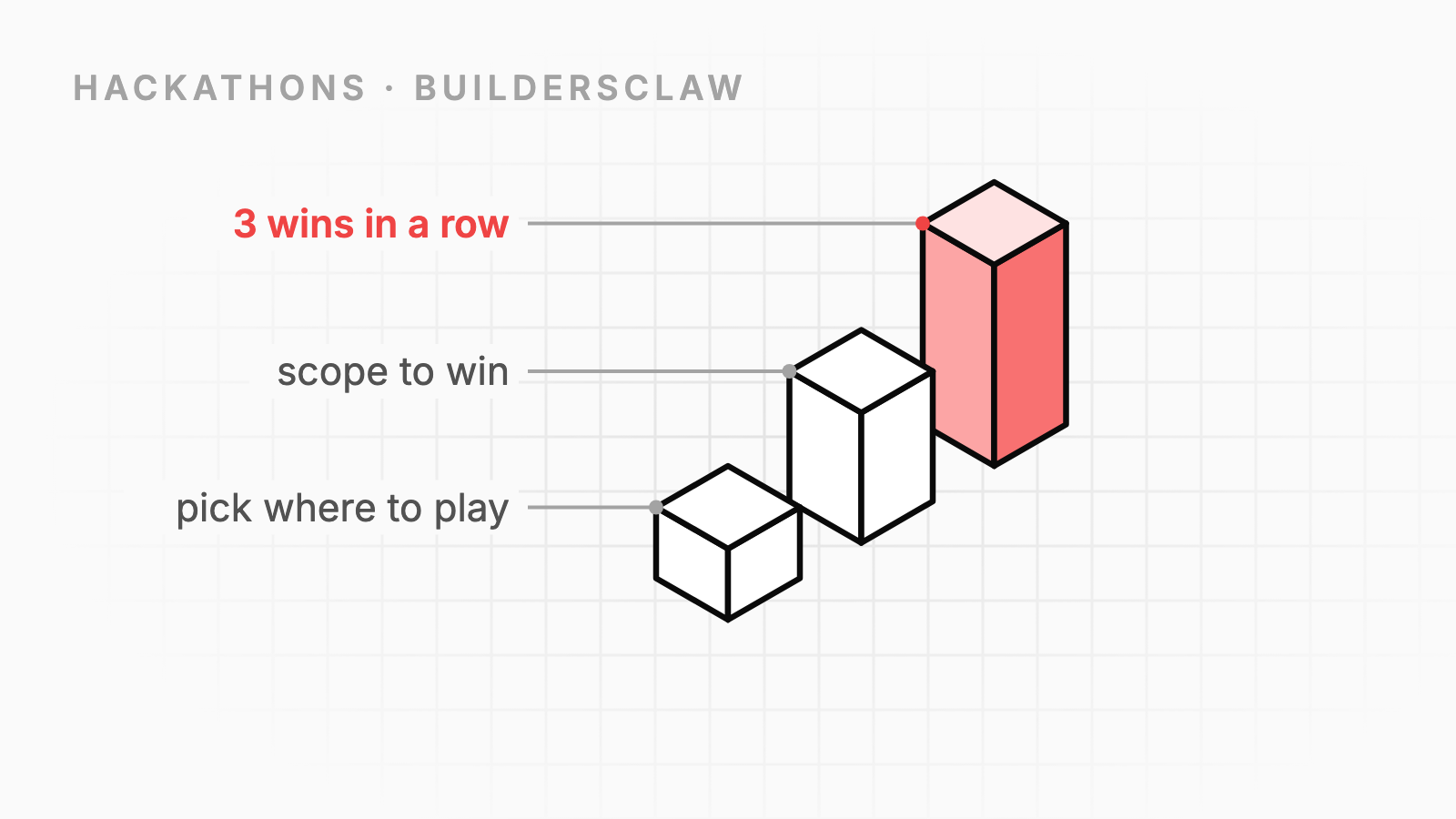

6+ hackathons won.
That sounds cleaner than it felt.
From the outside, a streak like that can look like momentum, confidence, or some kind of secret edge. From the inside, it was mostly careful filtering, tight scoping, and repeated decisions about what not to do.
This is not a highlight reel. I do not think I cracked hackathons. I just got better at treating them as constrained games instead of open-ended product work.
The biggest lesson was this: process and judgment beat hustle.
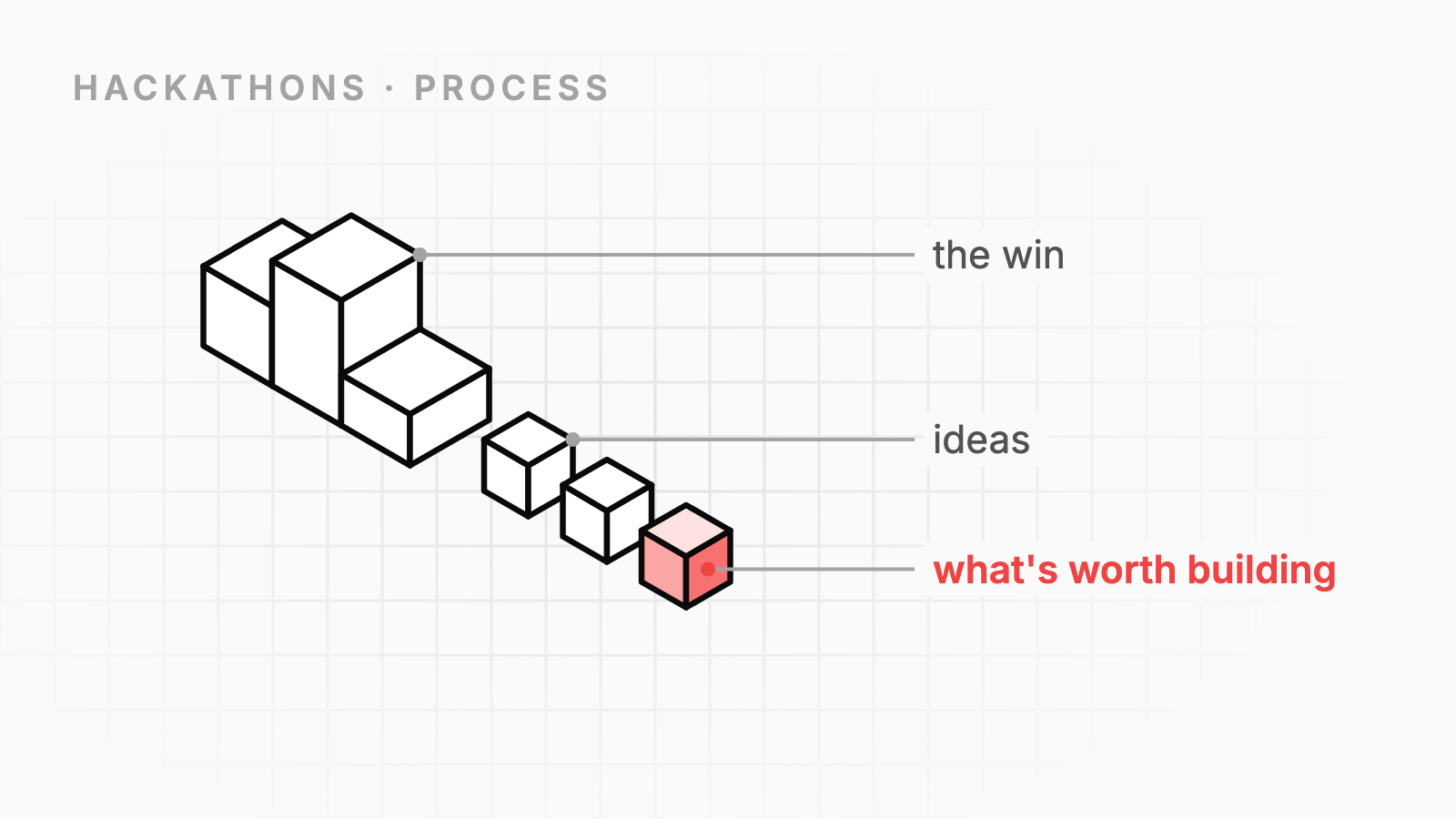
First: I got pickier about which hackathons to enter
A lot of people treat hackathons like lottery tickets. Apply to many. Build fast. Hope the right judge sees it.
I stopped doing that.
Instead, I looked for a match between three things:
- What the judges were likely to reward
- What I could build convincingly in the time available
- What story I could explain clearly in a short demo
That cut out a lot of events.
Some hackathons are really startup theater. Some reward deep technical novelty. Some reward social impact. Some mostly reward polished demos around a sponsor API. None of that is bad, but they are different games.
I entered the ones where I could see the rubric without needing it written down.
That meant reading past winners, looking at sponsor prompts, checking who the judges were, and asking a basic question: if I spend a weekend on this, can I build something that fits how this room decides good?
That sounds obvious, but I think many builders skip it because it feels less noble than just building the best thing they can think of.
The problem is that best is not the same as most likely to win here.
If you want to win, venue selection is part of the build.
Buildersclaw was scoped to win, not just to ship
This matters.
Buildersclaw could have become a much bigger product during the hackathon. There were many features I wanted to add. Some would have made it more useful. Some would have made it more technically complete.
I cut most of them.
The goal was not to ship a broad first version. The goal was to deliver a narrow, believable product that made one strong point very quickly.
That changed how I scoped it.
I looked for the smallest version that could do three jobs:
- Be understood in under a minute
- Solve a problem that felt real and expensive
- Show enough product judgment that judges could imagine it continuing after the event
That is a very different filter from normal product work.
In normal product work, you often ship rough edges if they help you learn. In a hackathon, rough edges cost trust. Judges do not live with your product long enough to forgive missing pieces. They mostly see what is in front of them right now.
So I scoped Buildersclaw around demo strength, not feature count.
I wanted the demo to feel inevitable. Clear setup, clear pain, clear action, clear result.
That meant saying no to side paths, edge cases, deeper infrastructure, and one more thing features that were interesting but diluted the story.
A lot of hackathon teams confuse effort with scope. They think the answer is to cram more in. I found the opposite. The strongest projects often feel smaller than expected, but sharper.
What actually worked
A few things helped more than long hours did.
I optimized for clarity early
I tried to explain the project before it was fully built.
If I could not describe the user, the pain, and the result in simple language, that was a warning sign. Usually it meant the product was too broad or the value was still fuzzy.
Clear explanation is not presentation polish. It is a test of whether the idea has shape.
I built the core loop first
Not the setup. Not the dashboard. Not the nice to have system around it.
The core loop.
What is the one thing a user does, and what is the one result that makes them care?
If that loop worked, the project had a chance. If it did not, nothing around it would save it.
I treated the judges as busy, rational people
Judges are not waiting to reward the hardest worker. They are trying to compare many projects quickly.
That means your job is not to prove you suffered for the build. Your job is to reduce their decision cost.
Make the problem easy to understand. Make the payoff easy to see. Make the architecture only as visible as it needs to be.
I kept technical ambition under control
A hackathon can tempt you into building a fragile stack just because it sounds impressive.
I think this is one of the most common mistakes.
If a technical choice increased the chance of demo failure, slowed iteration, or made the product harder to explain, it usually was not worth it.
The best technical choice in a hackathon is often the boring one that lets the main idea survive contact with reality.
What I would do differently
Even with the wins, I would change a few things.
First, I would spend more time earlier on the judging lens. I did this, but not systematically enough. I would now write down a simple scoring guess before building: what will they likely reward, what will they ignore, and what could quietly hurt me even if the build is strong?
Second, I would cut more aggressively on day one. Some of my stress came from carrying features too long before admitting they were not part of the winning path.
Third, I would preserve more post-hackathon notes. Right after a win, you still remember which choices mattered and which were noise. That fades fast. If you want to repeat good outcomes, capture the reasoning while it is fresh.
What winning actually unlocks
Winning does help.
It gives you proof of execution. It creates warm intros. It makes people more likely to take your next project seriously. It can also compress trust a little, especially if the people watching already understand how hard it is to ship under time pressure.
That is real.
But it does not do as much as people think.
It does not mean the product is a business. It does not mean users will care after the event. It does not mean you have distribution. It does not mean your judgment is always right now. It definitely does not mean you should turn every hackathon project into a startup.
A win is a useful signal. It is not a durable moat.
I think the healthiest way to read a hackathon win is this: for this room, with this format, under these constraints, you made better decisions than most people did.
That is valuable. It is also limited.
The main thing I learned
I do not think I won because I outworked everyone.
I think I won because I got better at choosing the right arena, narrowing the problem, and protecting the clarity of the build.
That is less romantic than hustle. It is also more repeatable.
If I had to reduce the whole streak to one line, it would be this:
Do less, pick better, and make the point obvious.
That is not just hackathon advice. It is a pretty good rule for building in general.